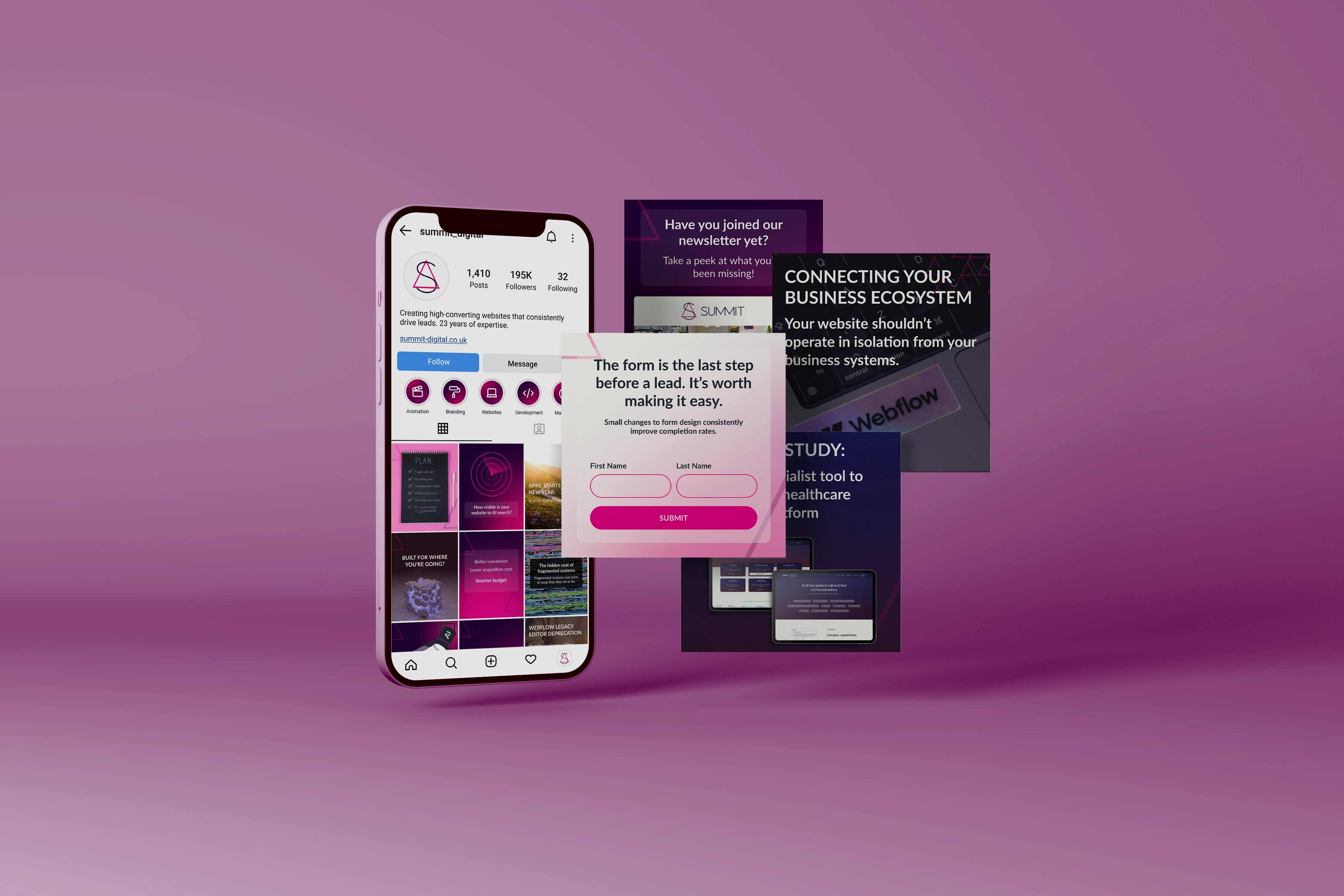
During my time at Summit Digital, I worked with a range of clients, each with distinct objectives for their online presence. Some focused on increasing visibility on LinkedIn, while others aimed to strengthen internal engagement through content celebrating employee achievements, milestones, and company culture.
Collaborating closely with a professional copyrighter, we developed targeted social media campaigns tailored to each client’s specific goals and audiences. Our approach prioritised timely, relevant content aligned with current events, helping to spark engagement and position each brand within meaningful online conversations.
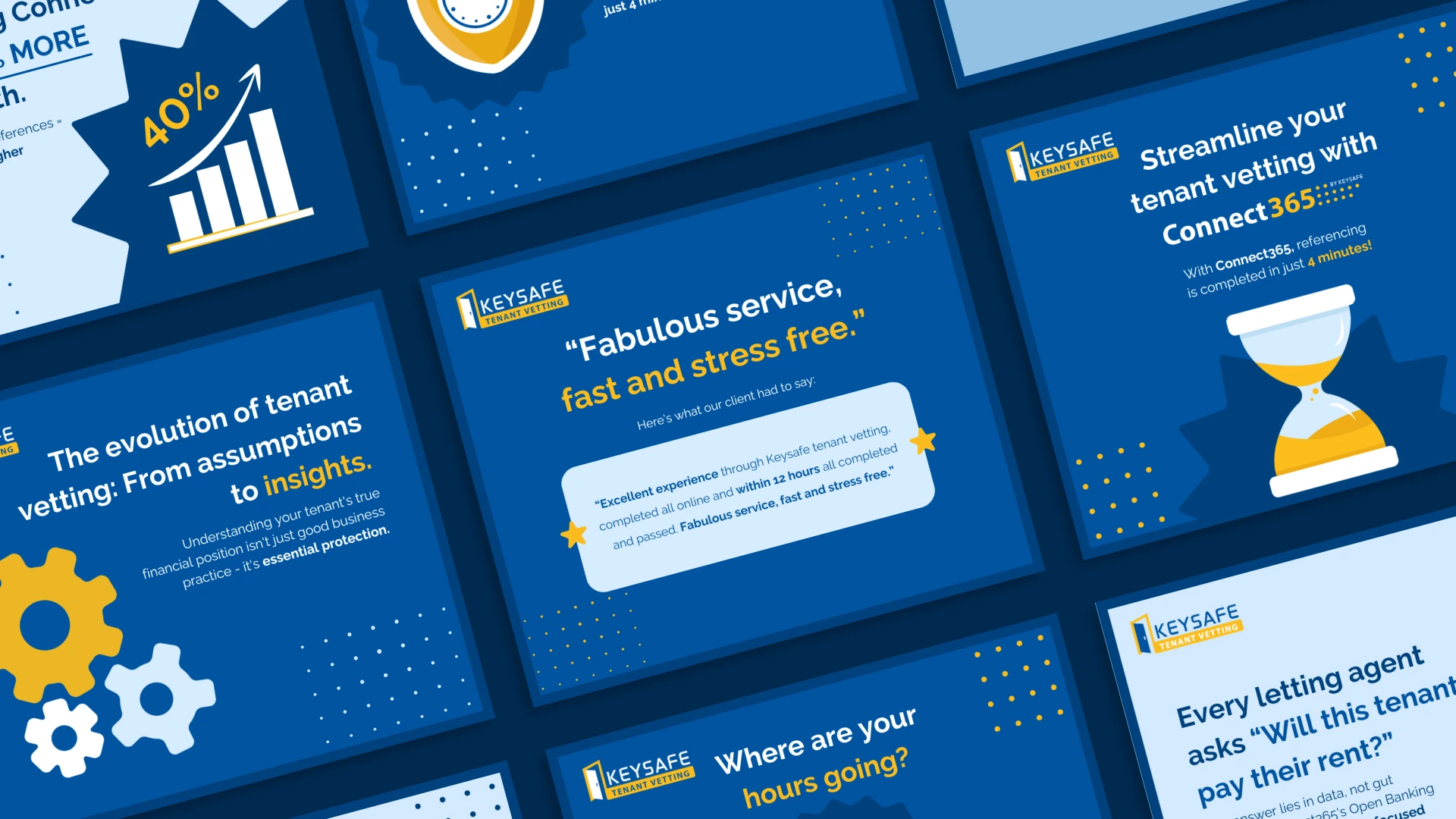
We maintained consistent visual identity and tone of voice across all platforms to ensure strong brand recognition. Campaigns were strategically planned on a quarterly basis, with sector-specific themes guiding content to keep messaging focused and engaging for defined target audiences.
With regular client communication and feedback, we ensured content was delivered efficiently and aligned closely with each client’s expectations and messaging objectives.



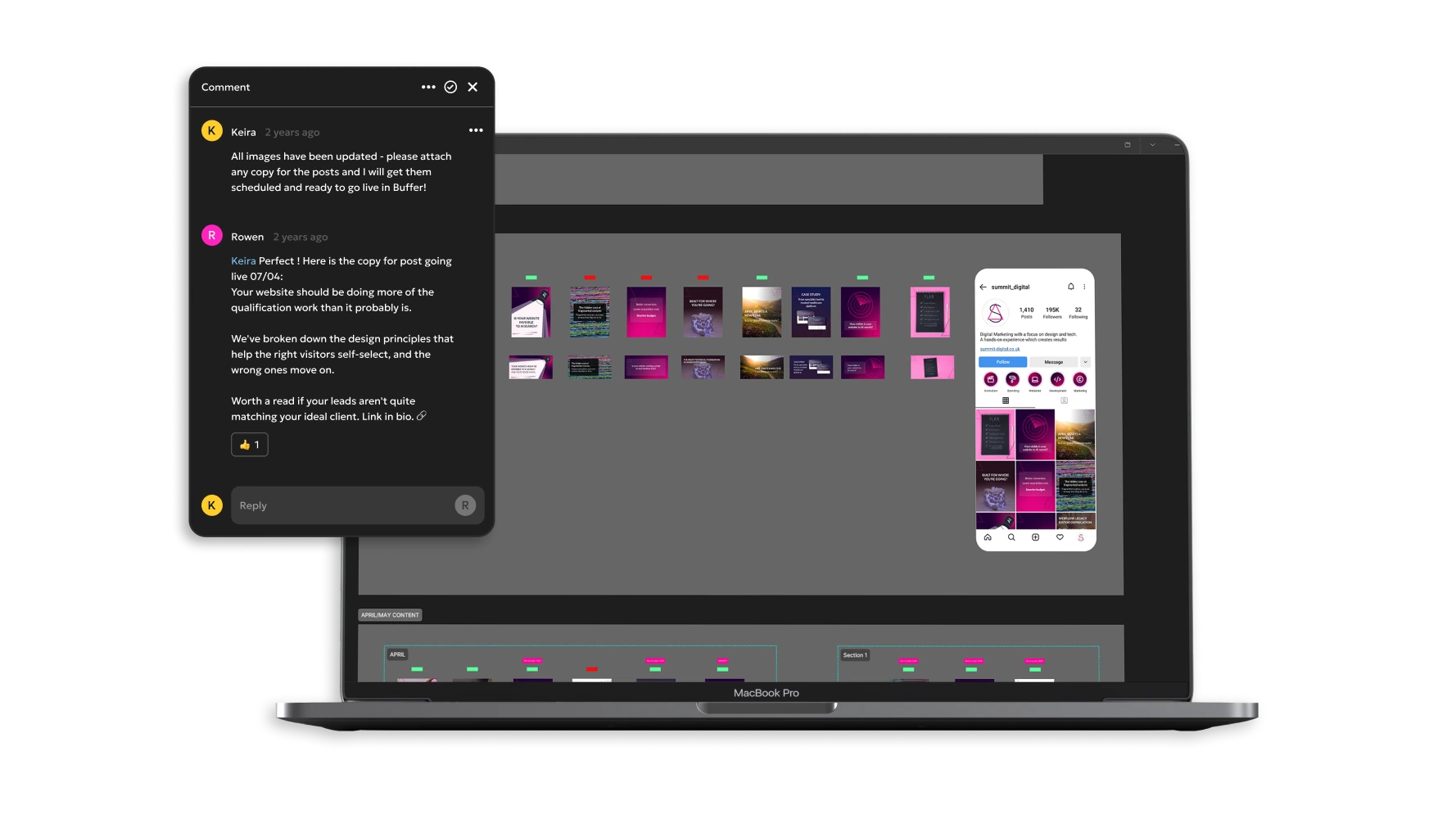
To plan and manage social schedules, we used a combination of Google Sheets and Figma to streamline collaboration and maintain visibility across all content. Google Sheets acted as the central hub for client communication, where copy was developed through ongoing feedback. Figma was used to design and organise all social assets, allowing the team to quickly view post layouts alongside their corresponding copy.
Our process followed a structured yet flexible workflow: beginning with client meetings to define messaging objectives, we created a three-month content plan, refined copy collaboratively in Google Sheets, and developed visuals in Figma. A traffic light system within Figma helped track progress, clearly indicating which posts were approved and ready for scheduling. Final content was then scheduled using Buffer to ensure timely and consistent delivery.
Designing in Figma allowed us to build reusable, flexible templates that could be easily updates by any team member. This was particularly valuable for last-minute changes, as structured layouts and auto-layout features allowed for changes without disrupting the design.
While my primary focus in these campaigns was design, I also contributed to the copywriting process where needed. This allowed me to develop a stronger understanding of tone, messaging, and audience engagement, strengthening my overall approach to creating effective social content.
We also ensured clients had clear visibility of their content schedules, encouraging them to actively engage with posts to maximise performance. This was especially effective on LinkedIn, where client interaction - such as reposting with additional commentary - helped extend reach and drive more meaningful engagement.
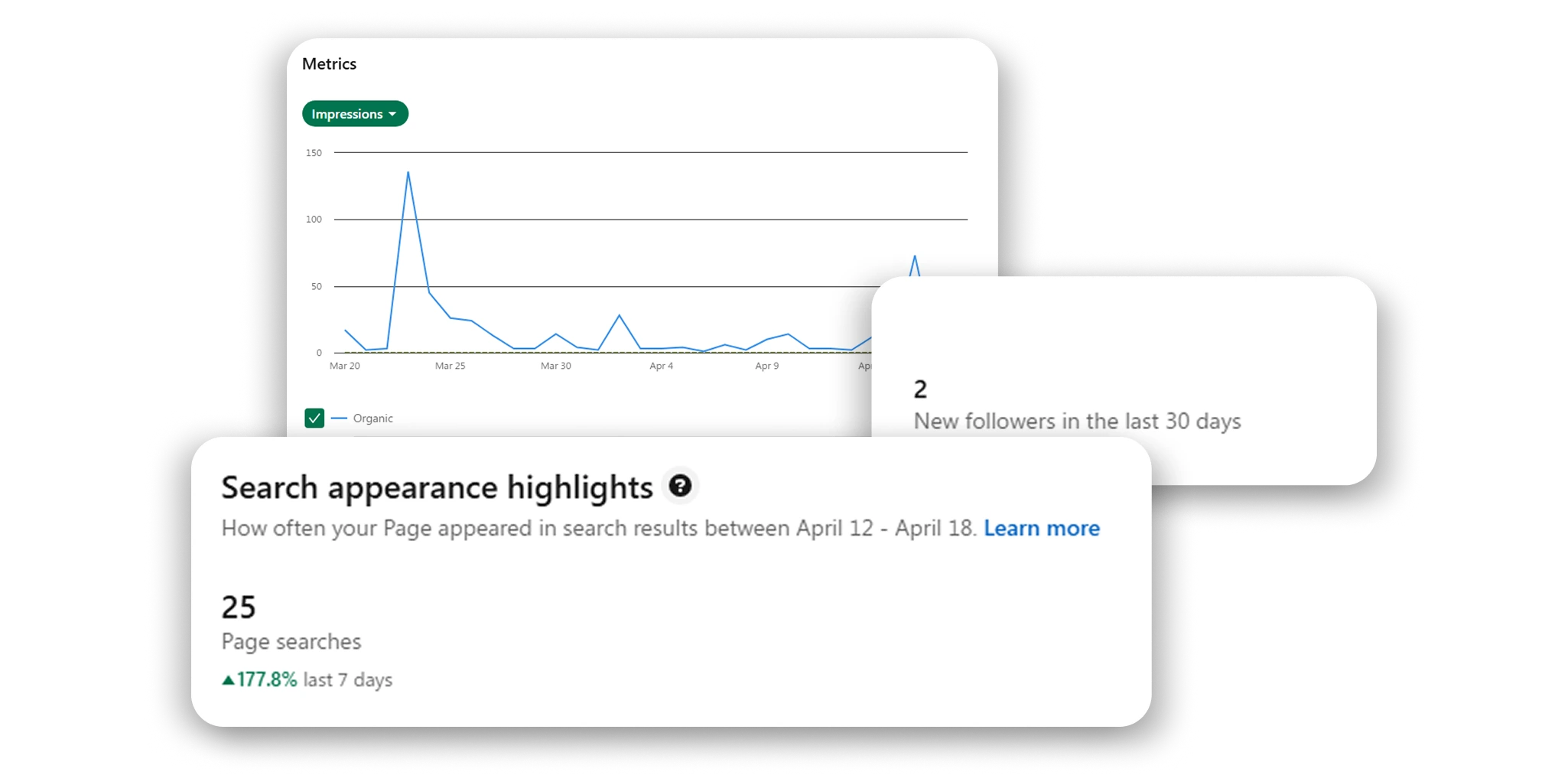
A key skill I developed through these campaigns was analysing performance data across platforms such as LinkedIn and Instagram. Using native analytics tools, we were able to gather insights that directly informed our strategy - identifying audience demographics, tracking page searches, and understanding which content drove follower growth and engagement. These insights allowed us to continuously refine our approach, focusing on the types of posts and messaging that delivered the strongest results.
Buffer also provided an additional layer of analytics, offering performance data and intelligent scheduling recommendations. Its suggested posting times helped us optimise when content was published, enabling us to better align with audience behaviour and maximise reach and engagement.
Overall, these campaigns resulted in a more cohesive and effective social media presence for each client, with improved engagement, stronger brand recognition, and clearer communication across both external and internal audiences. By combining consistent design, and data-led decision making, we were able to deliver content that resonated with target audiences and supported each client’s individual goals.
The structured quarterly approach ensured messaging remained focused and relevant, while ongoing analysis allowed us to continuously refine and improve performance over time. Increased visibility on platforms such as LinkedIn, alongside more active client participation, helped extend reach and create more meaningful interactions.
From a personal perspective, this project strengthened my ability to work collaboratively across disciplines, manage end-to-end campaign workflows, and think more strategically about both design and content. It also allowed me to develop a deeper understanding of analytics and copywriting, enhancing my ability to create well-rounded, effective social campaigns.
Explore a selection of collaborative projects, using motion and design to communicate ideas and bring them to life.